Valle de Bravo (site briefing)
Valle de Bravo (site briefing)
Mexico
Given Valle de Bravo's exceptional conditions and terrain, there are so many ways to fly XC. Valle de Bravo is a majestic place to fly, and is one of the most consistent places to fly in the world. The town of Valle de Bravo is a haven for wealthy Mexicans, so security is tight and ever-present. You can plan for every day to be flyable, that's what's unique about Valle, aside from the marvelous culture. Valle is a frequent site for Paragliding World Club (PWC) events. But don't let that intimidate you, there is fun flying to be had by all levels of pilots.
Flying to the lake of Valle de Bravo, if you can do it, is an exciting accomplishment and the quickest way home. The number of possible XC routes is endless at Valle. The town is only 15km in the air, but the terrain is technical, which is what makes it fun, challenging, and rewarding.
The town of Valle de Bravo is enchanting with many shops, restaurants, and street vendors. So, if you're bringing a partner that doesn't fly, they may just have just as much fun as you.
Valle also has hike-and-fly on the original launch in town, with a well established trail to the top. Don't expect to go XC from this launch, but some pilots like to do an evening flight to see the sunset from the air.
Location & Culture
Located about 2 hours west of Mexico City, Valle de Bravo is a colonial mountain town on the shores of Lake Avándaro. It boasts a sophisticated food scene, cobblestone streets, and a "Pueblo Mágico" status. The paragliding culture is deeply embedded here, with pilots from around the world congregating in the winter months.
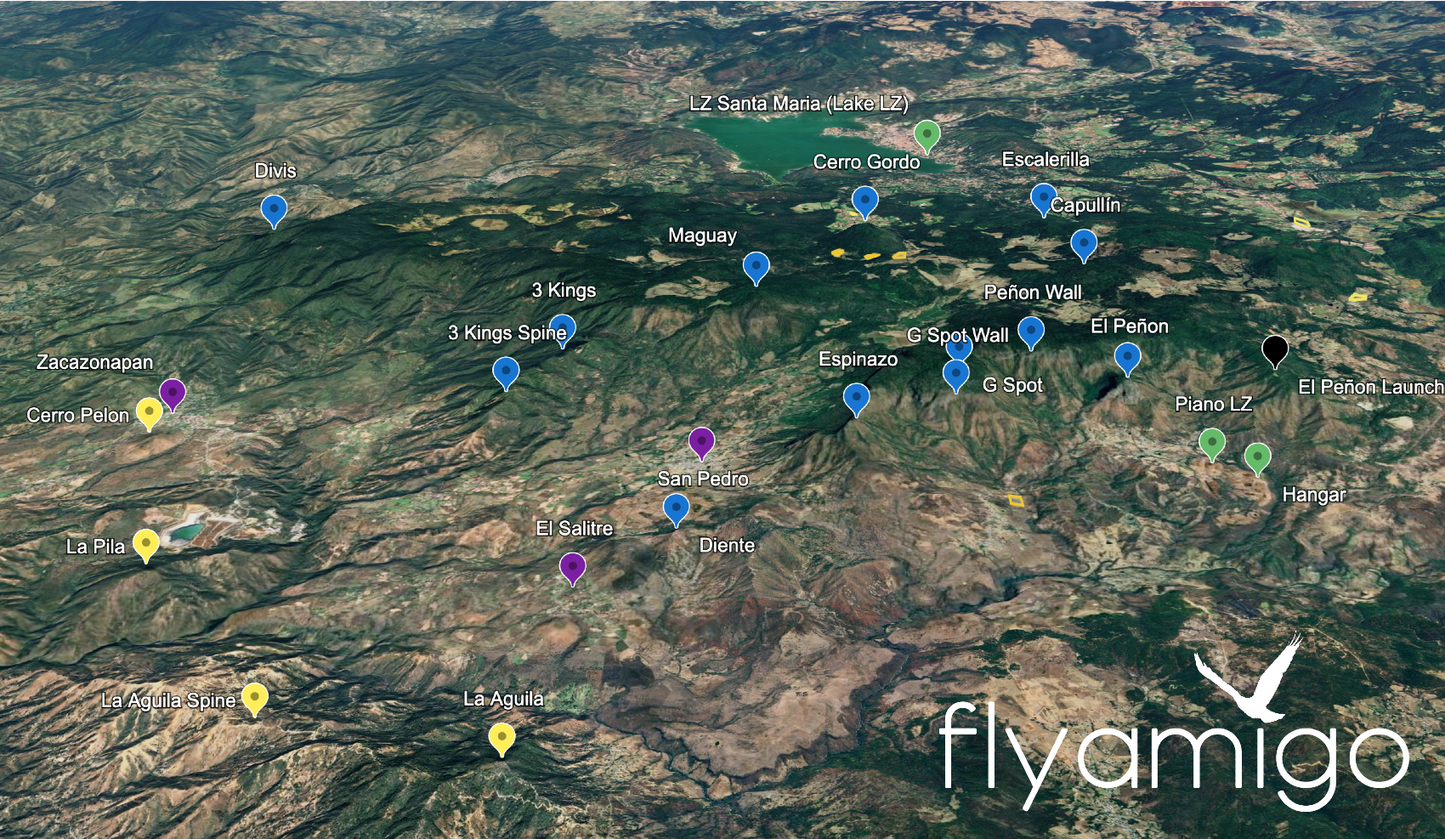
Google Earth View: Valle de Bravo
Major Paragliding Launches
There are two primary sites, each serving a different purpose. Note that visiting pilots must pay a fee to Club Peñón.
|
Launch Name |
Altitude (MSL) |
Google Maps Link |
Notes |
|
El Peñón |
~2,340m |
The world-famous XC launch located 45 mins south of town. Large, grassy, and fits multiple gliders. |
|
|
La Torre |
~2,300m |
Located directly above town. Used mostly for evening ridge soaring and tandems. |
Major Landing Zones (LZ)
The goal for many pilots is the "Lake Flight" from El Peñón back to town.
|
Landing Zone |
Google Maps Link |
Notes |
|
The Piano (El Piano) |
The primary LZ for El Peñón. Huge, flat plateau with a restaurant/bar on-site. |
|
|
Santa María (Lake LZ) |
The town landing near the lake. Can be small/technical when the water level is high. |
Hazards & Difficulties
- Altitude: Launch is at 7,700ft MSL, but cloud base often exceeds 14,000ft. Hydration and sun protection are critical.
- Convergence & Turbulence: Valle is famous for its convergence lines. While they provide massive lift, the boundaries can be very turbulent. Mid-day conditions (12 PM – 3 PM) at El Peñón can be "rock and roll" and are often avoided by intermediate pilots.
- The "Crazy Thermal Mesa (locals call it "G Spot"": A notoriously strong and consistent thermal trigger near El Peñón that requires active piloting.
- Dust Devils: Common in the valley LZs during the peak dry season; always watch for "dusties" before landing.
-
Power Lines: Numerous high-tension lines cross the valley floor between the launch and the lake.
Recommended Experience
- Level: Autonomous P3 (Intermediate) for El Peñón mid-day; P2 (Beginner) is acceptable for morning sled rides or La Torre evening soaring.
- Why: The air is "punchy" compared to Colombia. Good kiting skills are mandatory for the often-windy launches, and confident thermal management is needed for XC.
Accommodations & Dining
Where Pilots Stay:
- Charlie’s Place (Posada San Juan): The legendary pilot hangout. Simple, safe, and close to the shuttle departures.
- El Rebozo: A hotel located closer to the road to launch, offering more resort-style amenities.
- Airbnb: Many pilots rent colonial houses in the Santa Maria Ahuacatlán neighborhood to be near the Lake LZ.
- Recommended Restaurants:
- La Michoacana: Famous for ice cream and fruit bars.
- Los Velas: Classic Mexican dining on the main square.
- The Piano Bar/Restaurant: Located right at the El Peñón landing; famous for its homemade burritos and post-flight beers.
Seasonality (Best Times to Visit)
Valle de Bravo has a long season, but the flavor of the air changes significantly:
- December: The most "amenable" conditions. Thermals are consistent but smoother, perfect for those new to the site.
- January – March (Peak XC): The strongest conditions. Cloud bases are at their highest, and 100km+ flights are common. It can be quite turbulent mid-day.
Getting to the Lake
Here's a short 10-minute introduction into XC at Valle de Bravo.